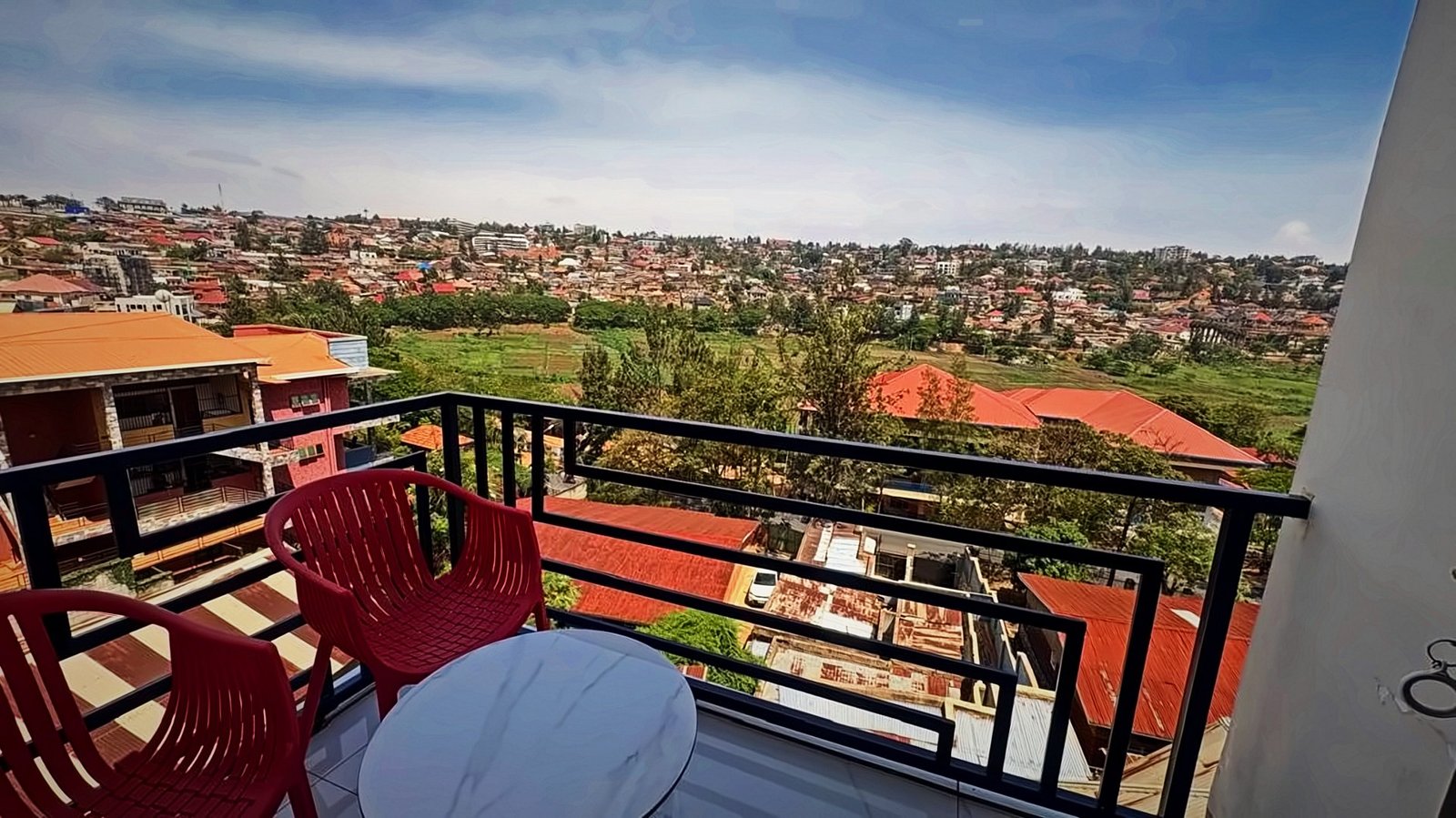
Short answer: Base yourself in a furnished apartment for your first month, sort immigration and permits through official channels, then explore neighbourhoods before you sign a long-term lease. A monthly stay at Holy Apartments is $400 for a studio and $600 for a one-bedroom, with cleaning, internet, gas and all bills included, 3 minutes from Kigali International Airport.
Key takeaways
- Spend your first month in a furnished base so you can focus on paperwork, work and finding the right neighbourhood.
- Use official sources (the immigration website and Irembo) for visas, permits and registrations.
- Visit several neighbourhoods at different times of day before committing to a lease.
- Set up mobile money, a SIM, banking and healthcare early. They make everything else easier.
Why Kigali?
Kigali is known for being clean, orderly and increasingly connected, with a growing community of professionals, entrepreneurs, diplomats, NGO workers and remote workers. It is hilly and green, English is widely used in business, and the city has co-working spaces, international schools, hospitals and a growing restaurant scene. That combination makes it an attractive place to relocate, and the first few weeks are where a good plan pays off.
Before you land
- Immigration: confirm the right visa or permit for your situation on the official Rwanda immigration website. Residence and work permits depend on your purpose (employment, investment, study, family).
- Employer or sponsor: if you are relocating for work, ask your employer what support and paperwork they provide.
- Accommodation: book your first month in advance, ideally near the airport for a calm landing. Send your flight details so pickup can be arranged.
- Documents: carry certified copies of passports, qualifications, marriage or birth certificates if needed, plus passport photos.
- Health: speak to a travel clinic and check any vaccination requirements for your route.
- Money: arrange access to funds that work internationally and tell your bank you are moving.
Your first-month plan, week by week
Days 1 to 3: land and settle
- Arrange airport pickup so your first ride is easy.
- Check in (possible at any time at Holy Apartments), rest, and get the Wi-Fi working.
- Buy a local SIM and set up mobile data. You will need your passport.
- Locate the nearest supermarket, pharmacy and a reliable taxi or ride-hailing option.
Week 1: get connected
- Open a mobile money account if you are eligible, and learn how locals pay.
- Explore the area on foot. Note noise, traffic, and amenities.
- Find a co-working space or café if you work remotely, such as the hubs in central Kigali.
- Register with your embassy or consulate if appropriate.
Weeks 2 to 3: paperwork and banking
- Follow the official process for your permit or residence status, using the immigration website and Irembo.
- Open a local bank account where required. Banks in Rwanda include Bank of Kigali and several international groups. Ask what documents each requires.
- Find a doctor and a hospital. Kigali has several well-regarded hospitals and clinics. Check your insurance coverage.
Weeks 3 to 4: choose where to live
- Visit shortlisted neighbourhoods at different times, including rush hour and evenings.
- Test your real commute (office, school, airport).
- Ask residents and colleagues for recommendations. Reputable agents and local contacts are valuable.
- Decide whether to extend your monthly stay while you finalise a lease.
Kigali neighbourhoods at a glance
| Area | Character |
|---|---|
| Kicukiro / Kanombe | Residential and quiet by comparison, close to Kigali International Airport and the Rwanda Art Museum. |
| Kiyovu | Central and established, close to banks, offices and restaurants. |
| Kimihurura and Kacyiru | Embassies, offices, restaurants, the Kigali Convention Centre area and arts spaces. |
| Nyarutarama | Upmarket residential area popular with expatriates. |
| Remera and Kimironko | Busy, lively, markets, shops and everyday local life. |
| Nyamirambo | Vibrant, cultural and walkable, known for its character. |
Descriptions are general. Visit before you decide, because the feel of each area changes by street.
Schools, healthcare and work
Schools
Kigali has international and bilingual schools, such as Green Hills Academy and Kigali International Community School, among others. Places can be limited, so start enquiries early and ask about application timelines.
Healthcare
Kigali has public and private hospitals and clinics. Make sure your insurance is valid in Rwanda, keep emergency numbers handy, and know the nearest facility from your home.
Working and networking
Co-working spaces and innovation hubs in the city support remote workers and start-ups. Meeting people in your field is easier when you attend events and join local communities early.
Budgeting your first month
Costs depend on your lifestyle, so build your own budget from these categories:
- Accommodation: at Holy Apartments, $400 (studio) or $600 (one-bedroom) a month, all bills included.
- Transport: taxis, ride-hailing and moto-taxis, plus airport pickup if you use it.
- Food: markets and supermarkets for cooking, plus eating out.
- Connectivity: mobile data (apartment internet is included).
- Admin: permit fees, document copies, and any agency fees.
- Buffer: a cushion for the unexpected during the first weeks.
An all-inclusive rate removes the most unpredictable lines from the budget. See what “all bills included” means.
Common mistakes to avoid
- Signing a long lease on day three. Learn the city first.
- Underestimating traffic. A short distance can take a long time at rush hour.
- Skipping the written details. Get inclusions, deposits and terms in writing.
- Relying only on cards. Carry some cash and learn mobile money.
- Delaying paperwork. Start official processes early and keep copies.
How Holy Apartments helps newcomers
- Furnished apartments with air conditioning, hot water and a TV.
- Cleaning, internet, gas and all bills included.
- One-bedroom apartments with their own kitchen, studios with a shared kitchen.
- Parking, security, a generator, a lift and a rooftop.
- Check-in at any time, 3 minutes from the airport, with paid pickup available.
Learn more on our monthly stays and relocation page.
Moving to Kigali timeline: from 3 months out to arrival
Three months before
- Confirm the right visa or permit pathway and start preparing documents.
- Research neighbourhoods, schools, healthcare and workspaces.
- Decide what to ship and what to buy locally.
One month before
- Book flights and your first month of accommodation.
- Share your flight details with your host and arrange pickup.
- Arrange international health insurance if needed.
- Notify banks and set up multi-currency access.
The week before
- Pack documents in your hand luggage, with copies saved digitally.
- Download maps and key apps for offline use.
- Pack reusable bags (no plastic bags).
Documents to keep together
- Passport and passport photos
- Visa, permit or approval documents
- Employment, assignment or sponsor letters
- Qualification and professional certificates
- Marriage and birth certificates if relocating with family
- Insurance documents and vaccination records
- Bank details and proof of funds if requested
Settling culturally
Newcomers often find Kigali orderly, polite and quiet compared with other cities. Greet people warmly, be punctual but expect some flexibility, and take part in community life where invited. The monthly umuganda community work is a distinctive part of Rwandan life, and morning traffic and shops can be affected on those days. Learning a few words of Kinyarwanda goes a long way, and joining local clubs, faith communities or professional groups helps you build a network quickly.
Relocating with family
If you are moving with a partner or children, prioritise schooling, healthcare access and a home with a proper kitchen. A one-bedroom apartment with its own kitchen is a practical first home while you search, and having a stable base shortens the stress of the early weeks.
Choosing a neighbourhood: a decision framework
- Define your anchors. Where will you work or study, and how often will you travel to the airport?
- Set your budget for rent, utilities and transport together.
- Shortlist three areas and visit each at morning rush, midday and evening.
- Test the commute by actually doing it.
- Check amenities: supermarkets, clinics, schools, gyms and parks.
- Ask residents about noise, water, power and internet reliability.
Renting a long-term home in Kigali: what to confirm
- The lease length, renewal and exit terms.
- The deposit and how it is returned.
- Which utilities are included and how meters work.
- Who is responsible for repairs and maintenance.
- Furnishing and appliances provided.
- Security, parking and access.
- Whether the landlord can provide the documents you may need for official registrations.
Get everything in writing, and consider asking a trusted local or professional to review the agreement.
Cost of living: build your own budget
Rather than rely on generic figures, track your real costs during your first monthly stay. Note groceries, transport, eating out, mobile data, and activities. By the end of the month you will have a realistic baseline for deciding what rent you can afford when you choose a long-term home.
Keeping in touch and building community
Relocating is as much social as logistical. Join professional groups, attend events, try local clubs and faith communities, and explore co-working spaces. The rooftop and common areas of your building can be a good place to meet neighbours. Over the first month, aim to build a small circle of people you can ask for advice.
When to move from a monthly stay to a long-term home
- You know your commute and neighbourhood preferences.
- Your permits and registrations are progressing or complete.
- You have found a landlord and terms you trust.
- You have the budget for deposit and furnishing, or you have chosen a furnished long-term option.
If your new home is delayed, you can extend your monthly stay rather than rushing. Tell us your dates and we will confirm availability.
Frequently asked questions
How long should I stay in temporary accommodation when moving to Kigali?
Many newcomers use the first month to settle and find a home. Take as long as you need to choose well.
Do I need a visa to live in Rwanda?
Residence requires the right permit for your situation. Check the official immigration website for current requirements.
Can I extend my stay at Holy Apartments?
Yes. Tell us your dates and we confirm availability and the rate for longer stays.
Is the apartment furnished?
Yes. It includes furniture, air conditioning, hot water and a TV.
Which area should I live in?
It depends on your commute, budget and lifestyle. Visit several neighbourhoods at different times before deciding.
How do I pay for things in Kigali?
Cards work in many places, but carry cash and learn mobile money for everyday use.
General guidance, last reviewed October 2026. Immigration, tax and legal rules change. Verify with official sources and professional advisers.